Central Message
Closed guard is a highly offensive position. As a beginner, a closed guard can often be seen as a defensive holding position. For the person in closed guard, the only realistic thing they can do is escape. This creates a huge asymmetry between the players.
Overview
Why Closed Guard
- The advantage of closed guard is that it puts your hips over the opponents hips, even though you are overall in a bottom position.
- Closed guard is a highly offensive position. As a beginner, a closed guard can often be seen as a defensive holding position. For the person in closed guard, the only realistic thing they can do is escape. This creates a huge asymmetry between the players.
- Top Hip principle: The athlete whose hips are on top of the other opponent’s hips will always dominate the upper body submission game, regardless of who is in top or bottom position overall.
Skills needed to build for closed guard:
- Must hold closed guard long enough to launch attacks
- effective responses to all four main scenarios:
- Opponent on two knees
- Opponent goes to stand up
- Opponent is standing with head lower than hips
- Opponent is standing and achieved vertical posture
- Ability to break opponent’s stance and balance (i.e. kuzushi)
- Forward Kuzushi
- Sideways Kuushi
- Backwards Kuzushi
How to return a standing opponent back to the mat
- Double ankle sweep
- scoop handstand sweep
- omoplata sweep
The First Three Abilities We need to be Effective From Closed Guard:
-
Must hold closed guard long enough to launch attacks
- Common closed guard escapes and proper responses
- Opponent puts a knee in the middle of the closed guard.
- Response:
- grab a cross collar grip
- open up guard (might be needed)
- re-adjust hip
- close the guard
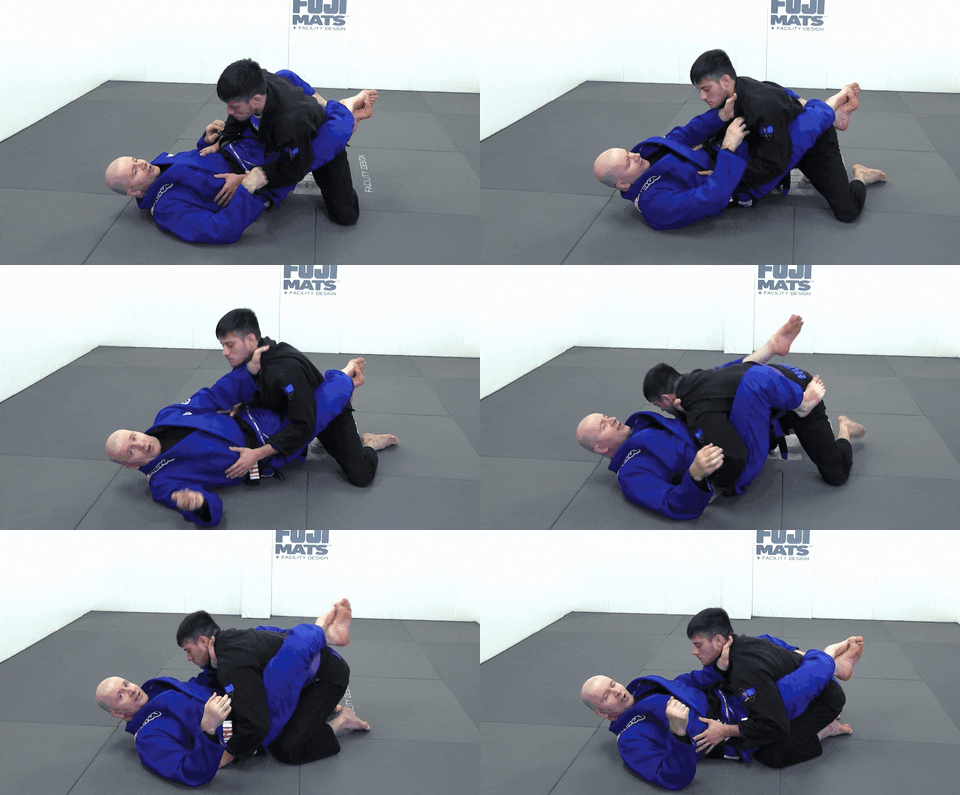
- Response:
- The opponent puts knee to the floor and starts to posture and press down on the knee with a hand to attempt to open up your guard.
- Response:
- Grab arm pushing on knee
- Pull arm across your centerline
- Break opponent back down to floor
- hold guard closed
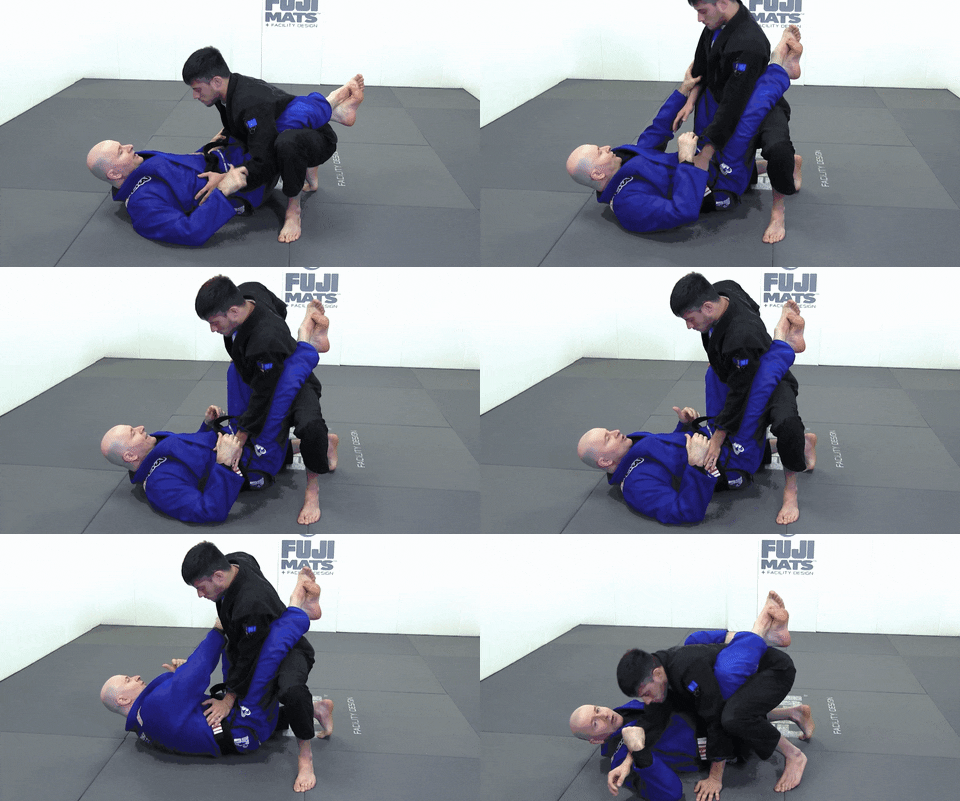
- Response:
- Opponent goes to stand
- Response:
- Apply some type of pulling to bring the opponent back to the ground.
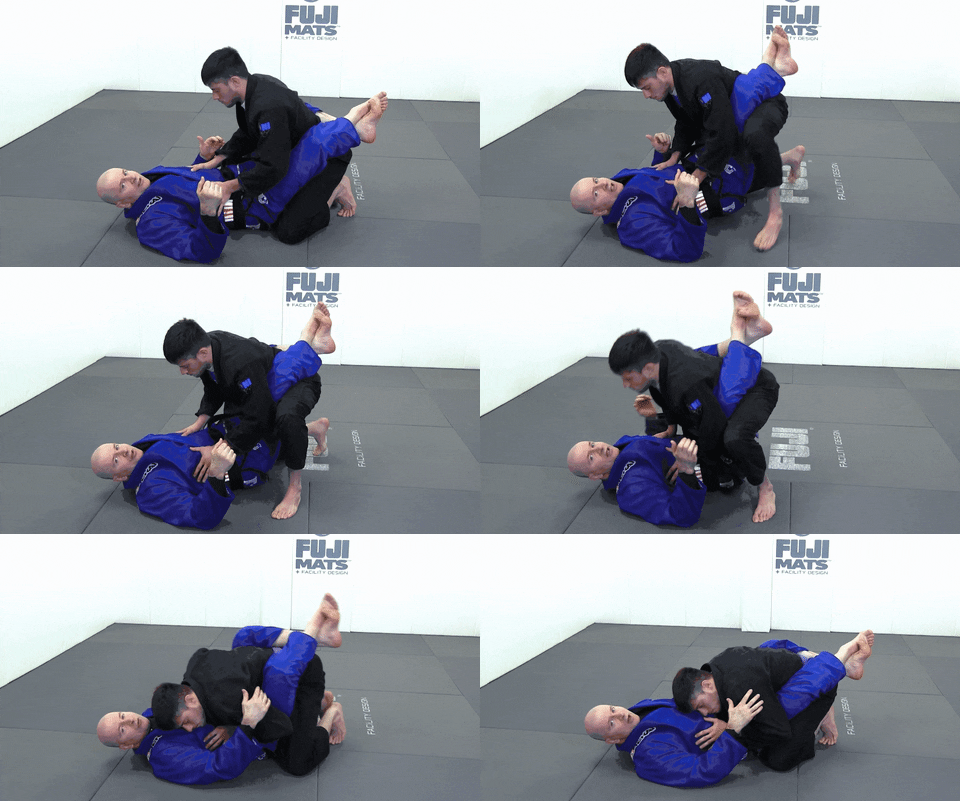
- Response:
- Opponent puts a knee in the middle of the closed guard.
- Common closed guard escapes and proper responses
-
Effective responses to all four main scenarios when in closed guard (in order from most favorable to least):
- Opponent on two knees
- Opponent goes to stand up
- Opponent is standing with head lower than hips
- Opponent is standing and achieved vertical posture
-
Ability to break Opponent’s Balance and Posture:
- Forward Kuzushi:
- used when:
- When opponent is bent over
- when opponent is on two knees
- when opponent is standing
- Method to generate:
- knee pull
- How the opponent will try and stop it.
- Posturing up
- grabbing your collar and bracing themselves up
- Misc
- The hands do little to pull forward compared to a knee pull. Hands mostly used for battling opponent responses.
- used when:
- Sideways Kushi
- used when:
- when opponent is on two knees
- Method to generate:
- half pendulum sweep
- Grab hold of wrist or sleeve cuff, preventing hand from basing
- plant foot (grabbed wrist side) blocking opponent leg from moving out and basing.
- Use free hand to grab other leg (inside or outside)
- Use the non-planted leg to off balance sideways in the direction of the blocked leg.
- half pendulum sweep
- Backwards Kuzushi
- used mostly when:
- Opponent is standing and achieved vertical posture (shoulders above hips)
- Method to generate:
- Hip bump
- scooping legs
- used mostly when:
- used when:
- Forward Kuzushi:
The Six Vulnerabilities Inside a closed guard:
-
Elbow across the centerline: you have worked the opponent’s arm across your centerline
- Allows entry into the [[side scissor]] position.
- If you can beat your opponent in height from this position, where your head is higher than theirs, it allows access to the back.
- If you can’t beat the battle for height, there are sweeps available.
- Do not only focus on one arm of the opponent. If the lead arm is locked in place, attempt to get the other arm across the center line.
- Allows entry into the [[side scissor]] position.
-
The top lock: Feet are closed behind of one of the opponent’s shoulders
- Think of the spine as a lever. As you move your feet towards the opponent’s head, the stronger the lever.
- Good for arm bars/locks
- Two methods:
- 45 inside: method for when opponent is on knees
- Head Below Hips: method for when opponent is standing
-
The trap Triangle: closed guard around head and one arm
-
Hand on the floor: One or more of the opponent’s hands are on the floor.
- Get your hands within the opponent’s hands. Use your hands in combination with a knee pull to get hands to the floor.
- Can move to the clamp position.
- Get your hands within the opponent’s hands. Use your hands in combination with a knee pull to get hands to the floor.
-
Opponent stands up in closed guard
- The opponent puts themselves into this position. You do not make this happen.
- As the opponent’s leg goes up, the head goes offline in the other direction.
- You can take advantage of off balancing in this position with a knee pull, especially on the second step up.
- When the opponent takes the first step, you should use your legs to put as much weight as possible on the opponent for their second step.
-
Hips on the mat: When one of the opponent’s hips/but is on the floor
- sweepsps from this position become extremely easy.
- [[Hip sweep]]
- [[Pendulum sweep]]
- [[Flower sweep]]
- [[Scissor Sweep]]
- You can generate this position when your opponent starts standing:
- Underhook their leg
- Push them backward so they land on their but
- sweepsps from this position become extremely easy.
Make a one-time donation
Make a monthly donation
Make a yearly donation
Choose an amount
Or enter a custom amount
Your contribution is appreciated.
Your contribution is appreciated.
Your contribution is appreciated.
DonateDonate monthlyDonate yearly BJJ-Notes