(Note: part 1 is an overview, for more detailed descriptions of moves see parts 2-8)
Overview
- The paradox of half guard
- It is one of the best passing opportunities for the top opponent and also one of the best sweeping opportunities for the bottom opponent.
- Solving the paradox
- Head and shoulder position determine who is in control.
- Bottom opponent needs to keep their head and shoulders free

- Top opponent needs to control head and shoulders
- Head and shoulder position determine who is in control.
- The value of half guard
- Tight connections slows pace down
- Effective in gi and no gi
- Works well for all body types
- The tight waist under hook series (primary series)
- A trilemma for the opponent with the roll through sweep
- Roll through sweep
- 3 critical steps to complete
- Lower leg shift
- Knee lift
- Hip shift
- 3 critical steps to complete
- Trilemma
- Opponent stops roll through sweep
- Attack the back
- Duck under
- Limp arm
- Cross body ride
- When opponent stops the roll through and back attacks
- Leg takedown sweeps
- Ankle picks
- Single leg
- Reverse double
- Leg takedown sweeps
- Tight waist position vs whizzer
- knee position
- Roll through sweep alternative
- Attack the back
- Opponent stops roll through sweep
- Roll through sweep
- A trilemma for the opponent with the roll through sweep
- The overhook series
- Used when the underhook is denied
- Two escape responses
- Single elbow escape
- Double elbow escape
- Enters into [[the clamp]]
- Attacks
- Triangle
- Arm bar: juji gatame
- Arm bar: ude gatame
- Kimura
- Attacks
- Enters into [[the clamp]]
- Knee lever series available from this position:
- 2 on 1 sweep
- 2 on 1 to back
- 1 on 1 scoop sweep
- Overhook sweep
- Knee lever as a method to gain an underhook
- Dealing with reverse half guard postures
- Opponent sits through to their hip
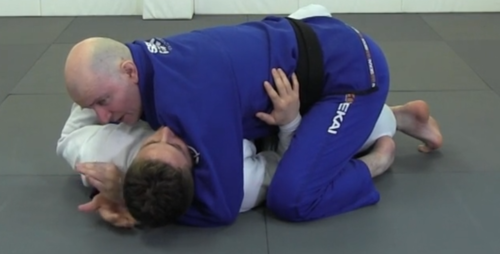
General Introduction
- Solving the paradox of half guard
- Paradox : It is one of the best passing opportunities for the top opponent and also one of the best sweeping opportunities for the bottom opponent.
- Solving the paradox requires you to understand the two problems of half guard
- Whoever controls the head and shoulders of the bottom opponent is winning
- Top opponent needs to control head and shoulders
- This is done by the top person gaining and under hook and cross face
- Bottom opponent needs to keep their head and shoulders free
- This is often done by the bottom opponent coming up to an elbow
- Top opponent needs to control head and shoulders
- Distance management
- You need to have the ability to both push and pull to manage distance
- When the top opponent gets to chest-to-chest position we lose our ability to push with our legs.
- You need to have the ability to both push and pull to manage distance
- Whoever controls the head and shoulders of the bottom opponent is winning
- What is the upside of playing bottom half guard
- You can create very tight connections with the opponent
- You have the easy ability to get under the opponent’s center of gravity
- This is only easy if you win the underhook battle
- You create the ability to use your whole body vs half of the opponent’s body
- Any time you have won the underhook and have come up to your elbow, you are halfway to your opponents back
- The only thing stopping you from taking the back is the opponent’s whizzer
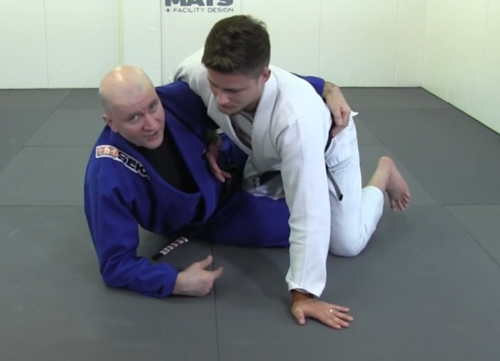
- Half guard leg connections
- Inside hook
- Outside hook
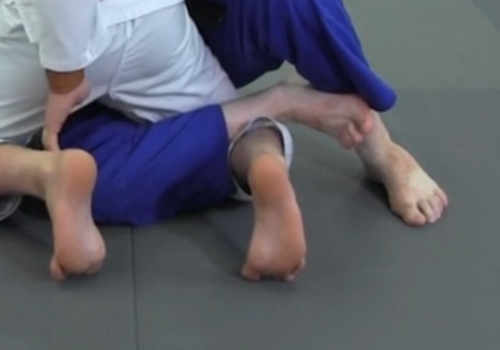
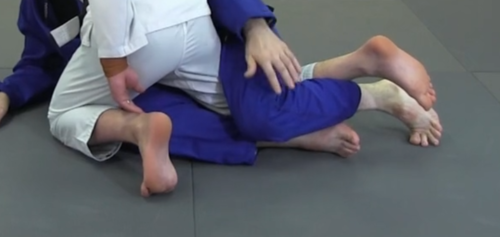
- Be sure your knee is pointing down to the back of your opponents knee
- Two forms:
- Above the knee
- Lower leg shift
- Above the knee
- Inside hook triangle
- You limit your movement in this position
- Works well for short periods of time
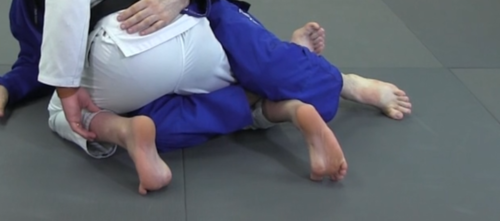
- Scorpion
- Inside hook, with a triangle and your foot under their foot
- One of the few leg positions in bottom half that allows you to push with your legs
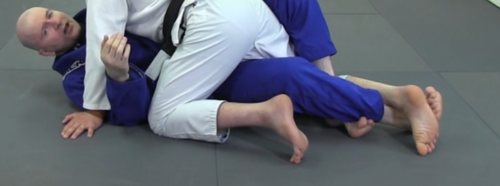
- Half butterfly
- One hook under the opponents knee
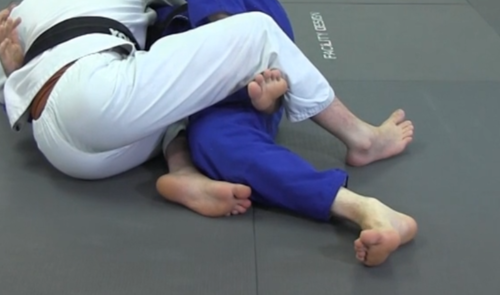
- Inside hook
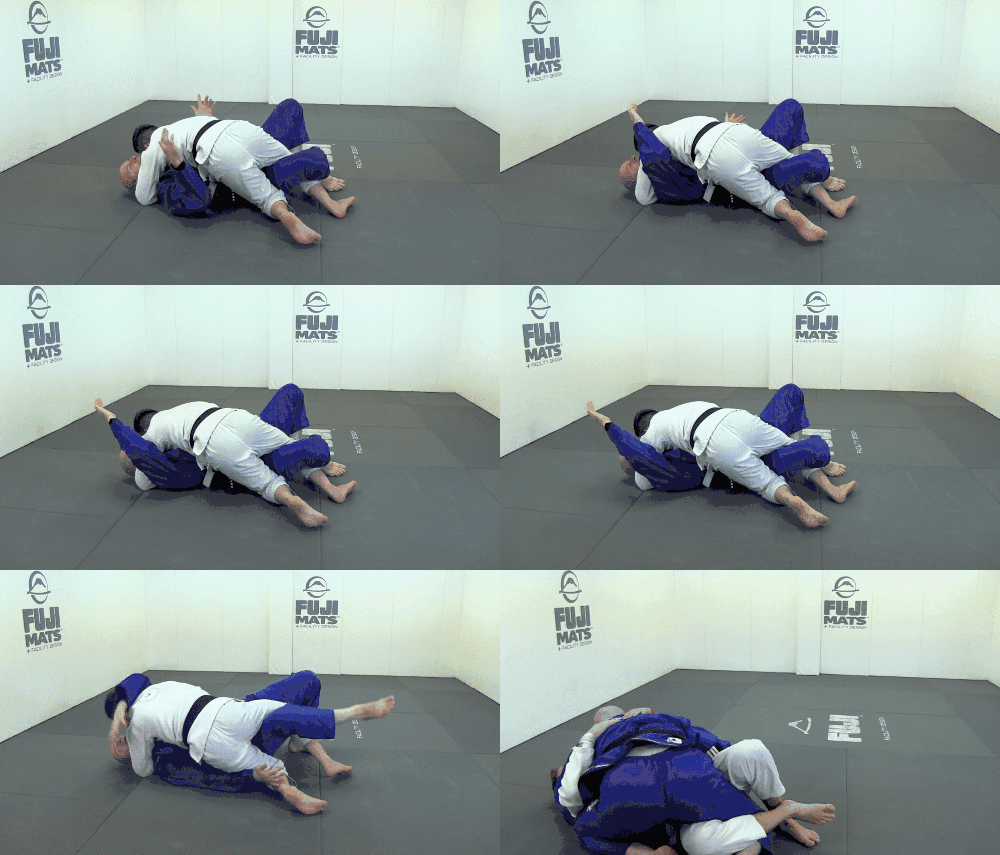
- Kuzushi: off balancing the opponent
- Windmill motion:
- May not sweep the opponent but will cause them to base with an arm or leg allowing you to gain position
- How to
- Inside hook
- Windmill your arms as one arm cross faces and the other goes to the knee
- Bridge while you do this motion
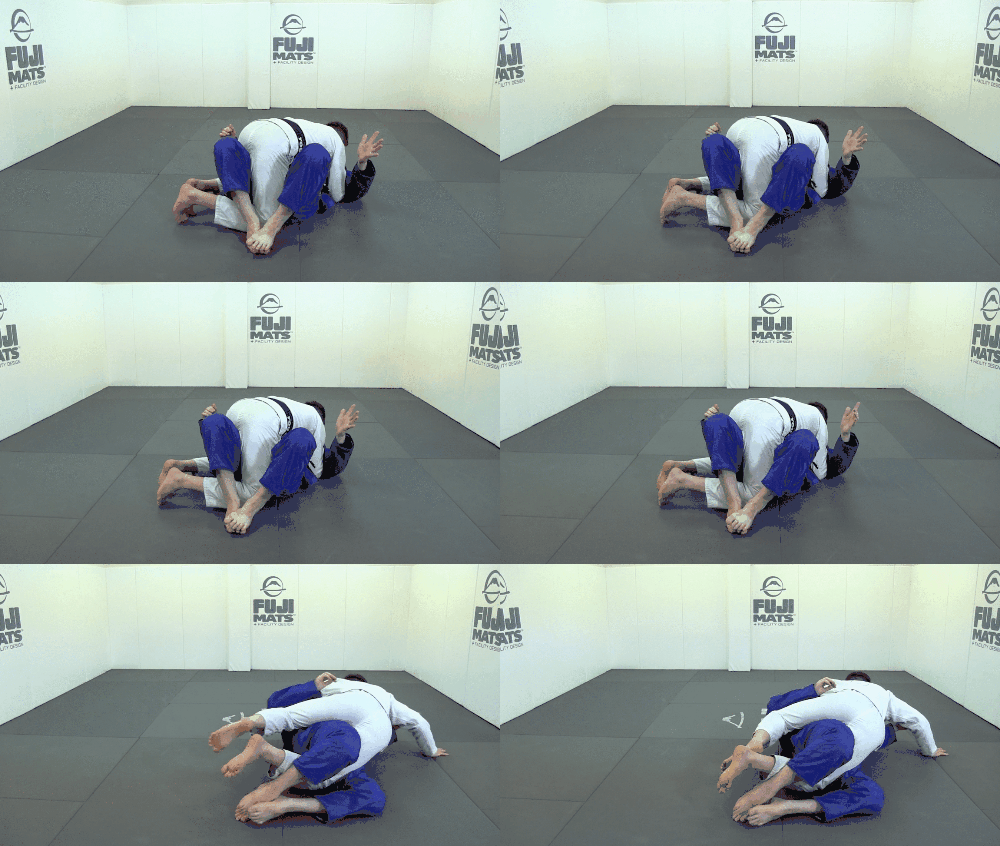
- Knee lever
- How to
- Inside hook
- Set outside foot on top of inside foot, so two big toes are on top of each other
- Take hips off floor and point knees to outside
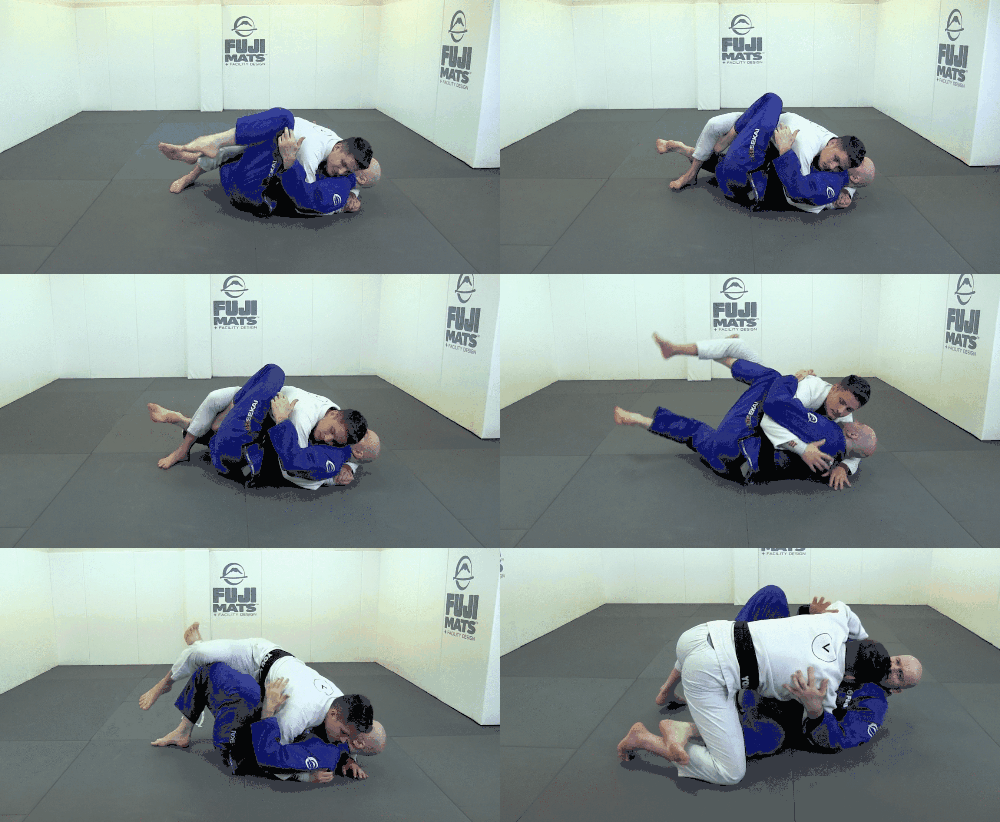
- How to
- Butterfly hook
- When the opponent knee comes off the floor obtain a butterfly hook
- Can use this to off balance opponent in both directions
- Scorpion elevator
- Must be done when both arms are under the opponents arms
- Obtain the Scorpion hook
- Push opponent overhead with hands
- Bring knees forward

- Windmill motion:
- Knee shields
- This position allows you to control your opponent and change your positioning
- You can easily come up to an elbow and enter the tight waist position
- Ear on opponent’s chest
- Arm across back with hand controlling the opponent’s far hip

- How to
- Put knee on opponent’s sternum facing towards their jaw
- Grab a Cross lapel grip
- The higher the grip, the more control
- Aim for a grip by the opponent’s ear
- Use other hand to thumb post inside the elbow of the opponent
- This is used to defend against them taking grips or cross facing you

- Attack series that will be covered
- The Tight waist position series
- Allows for three different threats
- Back take
- Ankle picks
- Roll through sweep
- Allows for three different threats
- The knee lever series
- sweeps
- Off balancing
- Single leg lapel feed
- Deep half guard
- The Tight waist position series
- Working from the worst case scenario
- Opponent is chest to chest, has underhook and cross face
- You can reverse with a single elbow escape
- Put hand on opponent’s belt
- Bridge
- Shrimp and get knee on opponents hip
- Push against opponent
- Trap the arm that was cross facing you
- Sweep
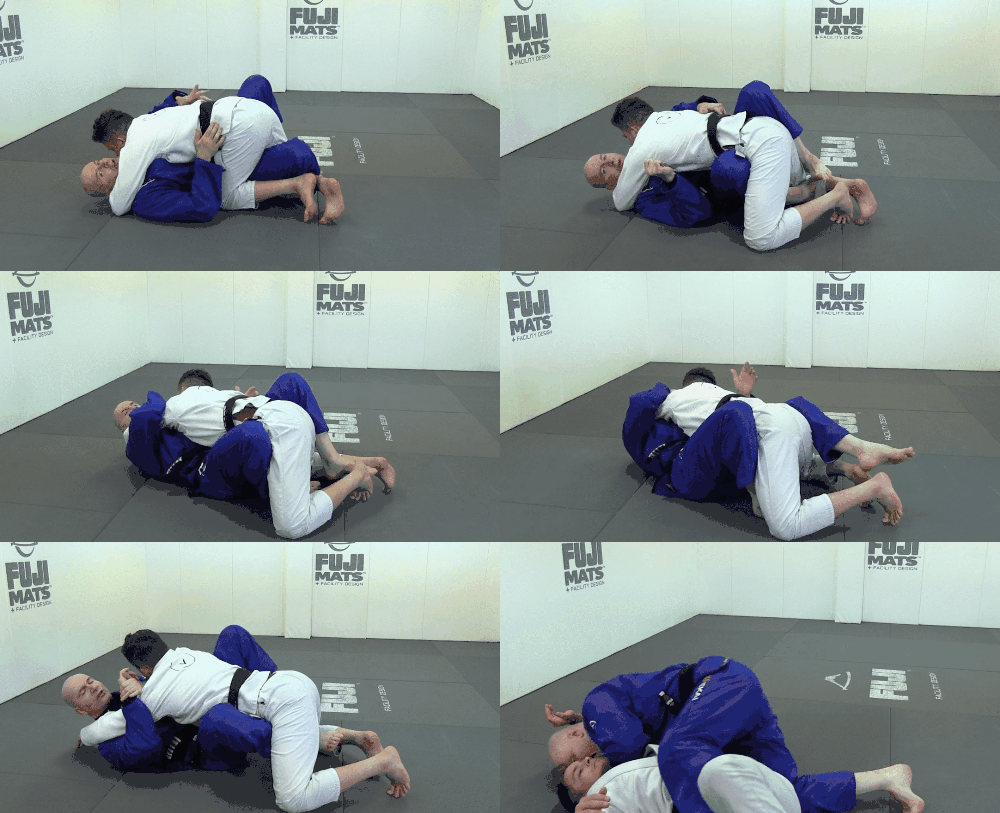
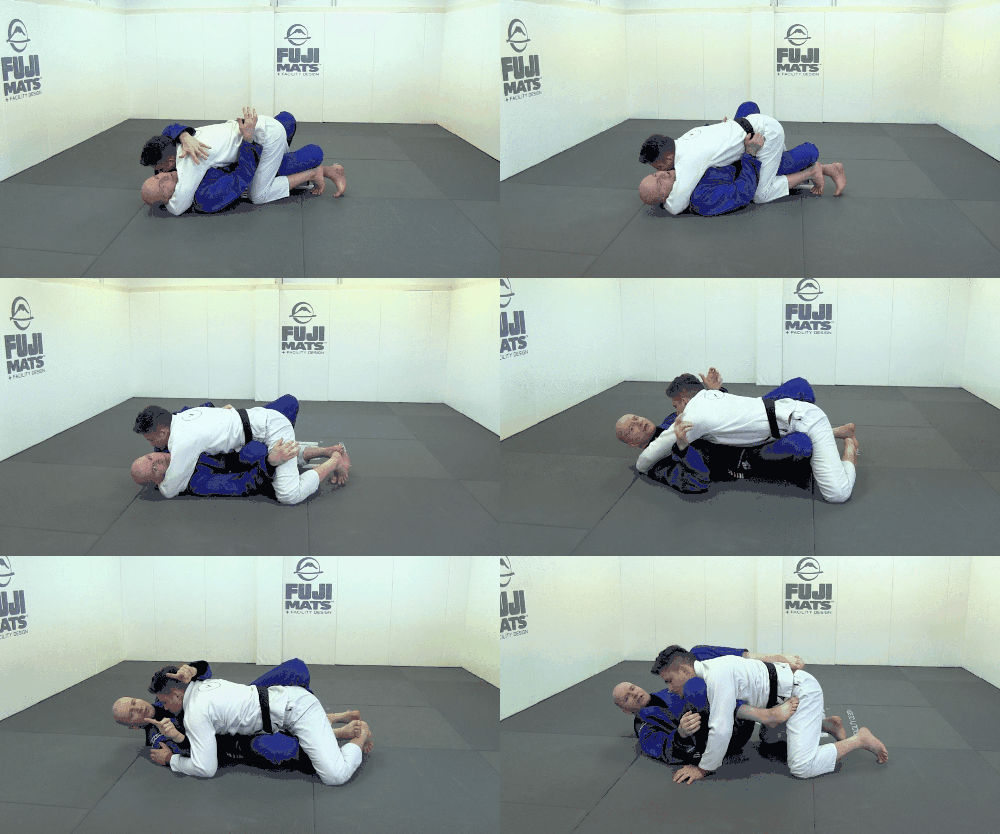
- Double elbow escape
- Put hand on opponent’s belt
- Bridge
- Shrimp and get knee on opponents hip
- Elbow escape with the same arm again getting the arm outside their shoulder
- Enter the clamp position
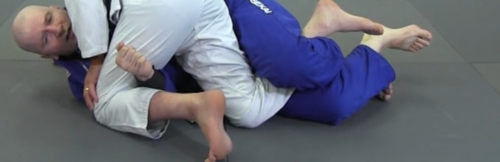
 BJJ-Notes